Wednesday, October 25, 2023

Bhakra creates new power generation record in July   

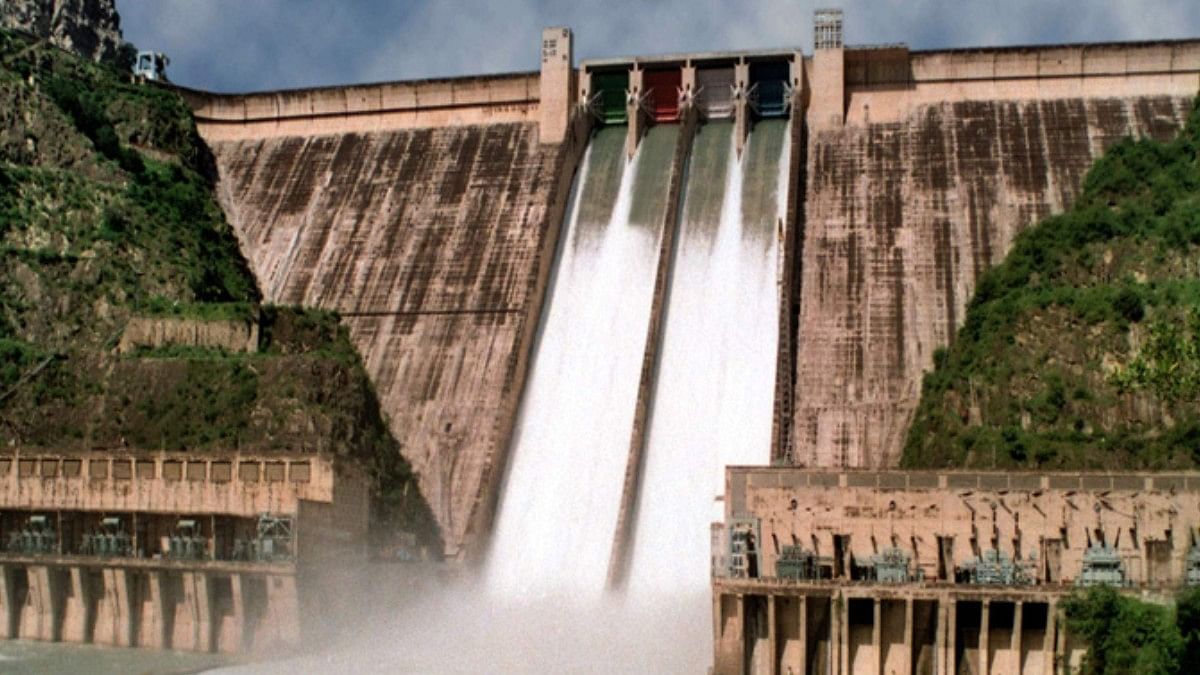
   The Bhakra power house has surpassed previous records of daily power generation and shattered the record of maximum instantaneous power generation in July 2023.
    The Bhakra power house has surpassed previous records of daily power generation and shattered the record of maximum instantaneous power generation in July 2023.
Bhakra creates new power generation record in July
    Addressing the gathering during the “Azadi ka Amrit Mahotsav” celebration hosted by Bhakra Dam Outreach Programme on Monday at Bhakra Dam, Sharma urged employees to continue their efforts towards progress.
    The Bhakra Outreach programme was organised by the Department of Water Resources, Ministry of Jal Shakti, in collaboration with National Dam Safety Authority (NDSA), Central Water Commission (CWC) and the Bhakra Beas Management Board (BBMB) at Bhakra Dam to promote dam tourism and raise awareness about the importance of effective water resource management.[Readmore]


Vice President To Confer 4th National Water Awards On 17th June, 2023

Ministry Of Jal Shakti Announces 41 Winners Across 11 Categories


Prize For Best State To Be Conferred On Madhya Pradesh While Best District Will Be Conferred On Ganjam District, Odisha

The Vice President of India, Shri Jagdeep Dhankhar will confer the 4th National Water Awards on 17th June, 2023 at an award distribution ceremony being organised at Plenary Hall, Vigyan Bhawan, New Delhi by the Department of Water Resources, River Development, and Ganga Rejuvenation (DoWR, RD &GR), Ministry of Jal Shakti. The Department has announced a total of 41 winners, including joint winners, for the 4th National Water Awards, 2022, covering 11 categories. Each award winner will be conferred with a citation and a trophy as well as cash prizes in certain categories.
    The 1st Prize for the Best State will be conferred on Madhya Pradesh; Best District will be conferred on Ganjam District, Odisha; Best Village Panchayat will be conferred on Jagannadhapuram Village Panchayat, Bhadradri Kothagudem district, Telangana; Best Urban Local Body will be conferred on Chandigarh Municipal Corporation, Chandigarh; Best Media will be conferred on Advance Water Digest Private Limited Gurugram, Haryana; Best School will be conferred on Jamiyatpura Primary School, Mehsana, Gujarat; Best Institution for Campus usage will be conferred on Shri Mata Vaishno Devi Shrine Board, Reasi, Jammu and Kashmir; Best Industry will be conferred on Barauni Thermal Power Station, Begusarai, Bihar; Best NGO will be conferred on Arpan Seva Sansthan, Udaipur, Rajasthan; Best Water User Association will be conferred on the Sanjeevani Piyat Sahkari Mandli Ltd, Narmada, Gujarat; and Best Industry for CSR Activities will be conferred on HCL Technologies Ltd., Noida, Uttar Pradesh. Click here to see the list of Awardees for 4th National Water Awards, 2022 [ReadMore]


Central Govt Calls for Better Utilisation of Rivers in J&K Under Indus Water Treaty

A model water-sharing treaty signed by the then Indian Prime Minister Jawahar Lal Nehru and Pakistani President Ayub Khan, the Indus Water Treaty was negotiated by the World Bank in 1960.

Srinagar: The government on Friday directed senior officials in Jammu and Kashmir to complete works on all Indus Basin Projects to enable "better utilisation" of India's rights under the Indus Water Treaty, an official statement said.

Central Govt Calls for Better Utilisation of Rivers in J&K Under Indus Water Treaty

The statement from Pankaj Magotra, Managing Director of the Jammu and Kashmir Power Development Corporation (JKPDC), which operates and maintains all power stations and power projects in the region, said that a meeting was held in Srinagar. The meeting was chaired by Vikram Misri, India's Deputy National Security Advisor, who reviewed the progress on hydropower projects in the Union territory.

"It was noted that progress had been made on several fronts, and emphasis was laid on completing the works on all the Indus Basin Projects in a timely manner to enable better utilisation of India's rights under the Indus Waters Treaty," he said.[ReadMore]


Penalty for cess? Union govt letter intensifies Himachal vs Haryana-Punjab tussle over hydel project levy

Chandigarh: Amid the ongoing tug-of-war over water cess on hydropower projects between Himachal Pradesh on one side, and Haryana and Punjab on the other, a letter from the Union Ministry of Power “disincentivising” states imposing such cess has further intensified the tussle.

Himachal CM tries to mollify counterparts

On 16 March, while moving the Himachal Pradesh Water Cess on Hydropower Generation Bill, 2023, in the assembly, the state Jal Shakti Department Minister and Deputy CM Mukesh Agnihotri said that the cess will generate Rs 4,000 crore revenue from 172 hydroelectric projects.[ReadMore]


 6 hydel power projects apply for water cess in Himachal 

Sixteen of the state's 172 hydroelectric power projects have applied for the implementation of a water cess. Last month, the Jal Shakti Department sent letters to 172 hydroelectric power projects, requiring them to register with it for the purpose of water cessation within a month.


The implementation of the cess has been challenged in the Himachal High Court by two commercial electricity firms.

The Central Government in its letter also stated that “Article 287 and 288 of the Constitution prohibits the imposition of taxes on electricity consumed by the Central Government or sold to the Central Government”. [ReadMore]


Wednesday, March 2, 2022

Mallannasagar earthquake theory baseless, says Telangana govt

According to the irrigation department, all the necessary studies has been done before starting the project in Siddipet.


Mallannasagar was inaugurated by the state chief minister K. Chandrasekhar Rao last Wednesday. The project, according to the state government, will provide water to 8.35 lakh acres of new ayacut under KLIS Package-12 to 19, along with stabilising the ayacut under existing irrigation projects such as Singur, Nizam Sagar and Sriram Sagar phase-1, which will propel the total ayacut under the project to 15.71 lakh acres.
Officials refute claims of earthquake
    According to a Telangana Today report, the officials said that earthquake theory was a baseless allegation. The government had the bottom strata of Mallannasagar studied by the Central Water and Power Research Station (CWPRS) in Pune, which ruled out the existence of lineaments, as stated by opponents.[Readmore]

Wednesday, January 12, 2022

Libraries and Legislatures Face Off Against Publishers on Ebook Access

by Nancy K. Herther
Posted On January 11, 2022

On Dec. 9, 2021, the Association of American Publishers (AAP), the national trade association for the U.S. publishing industry, “filed suit against the Maryland Attorney General seeking to enjoin and overturn an unconstitutional Maryland law that directly conflicts with the federal Copyright Act by forcing any publisher, domestic and foreign, to make their literary works available to Maryland public libraries in electronic book and audiobook formats according to timing, pricing, and other terms mandated by the state under threat of penalty.”

AAP asserts that the new law is “an impermissible and unconstitutional overreach into federal copyright law and an unjustified effort to divert copyright policy away from the U.S. Congress to state assemblies, at the expense of longstanding incentives and protections that are the foundation of our creative economy.”

In addition, AAP states that “some twenty-five years ago, the United States and hundreds of other countries addressed copyright interests arising in the context of the digital environment through a pair of binding instruments known as the WIPO Internet Treaties. These treaties, which the United States duly affirmed through a combination of existing law and the 1998 Digital Millennium Copyright Act, make clear that the copyright owner has the exclusive right to authorize the digital dissemination or transmission of a creative work, including in new and innovative formats and irrespective of whether the customer is in a bookstore, library, or the comfort of their own home.”

SUPPORT FOR LIBRARIES AND PUBLIC ACCESS

The Maryland law, according to AAP, gives “libraries unprecedented control over basic copyright transactions that are clearly reserved to those who write, develop, invest in, distribute, and make publicly available the invaluable array of novels, biographies, historical and political works, poetry, scholarship, and course materials that are the mission of publishing, and which together fuel entertainment, human empowerment, and scientific progress on a global basis. In seeking to regulate books, Maryland disregarded the testimony of publishers and authors, established law, and market facts.”

The negative reaction to the suit from library groups has been loud and clear. Library Futures has been in the forefront of opposition. This nonprofit, established to “empower libraries to fulfill their mission and provide non-discriminatory, open access to culture for the public good,” explains in an official statement that the law “represents the Maryland Library Association’s efforts to simply request equal access and pricing in digital content. Nevertheless, the AAP’s complaint calls Maryland’s law ‘radical.’”

Margaret Harding McGill writes for Axios, “Libraries say it is crucial for them to continue to service their communities, especially as digital access to books became even more important during the pandemic.” She notes that this comes as they “are successfully convincing state legislatures to help them win better terms for ebook licenses from Amazon and other publishers.”

AAP CLAIMS COPYRIGHT AND DUE PROCESS VIOLATIONS

On Dec. 16, 2021, AAP filed a motion that the court enact a preliminary injunction to block the Maryland law from going into effect on Jan. 1, 2022, claiming that the law would cause “irreparable” and “immediate” harm to the publishing industry if allowed to take effect. Federal judge Deborah L. Boardman set a remote hearing for Feb. 7, allowing the law to stand as of Jan. 1.

AAP contends that the Maryland legislation is “preempted by the United States Copyright Act, unconstitutionally interferes with interstate commerce, and violates the Constitution’s Due Process clause by mandating vague and unspecified licensing requirements.” Publishers Weekly reports that “AAP made public a letter (signed by a number of other copyright industry groups) to New York governor Kathy Hochul, urging her to veto New York’s version of the bill, which passed in June.” Hochul vetoed the bill on Dec. 29.

The Authors Guild has given strong support to AAP’s actions. Authors Guild CEO Mary Rasenberger says, “Alarmingly, several similar laws are currently pending in other state legislatures, suggesting that this is a concerted effort to roll back copyright protections that are integral to how publishing generates a return on investment and how authors earn income.”

COMPLEX ISSUES

“The law for eBooks is different from that which applies to printed books,” Kevin L. Smith, dean of libraries at the University of Kansas and director of the university press, notes via the LIBLICENSE group email list. Smith says this is “because the courts have determined that the ‘doctrine of first sale’ does not apply to digital objects. First sale, which says that the exclusive right to control distribution of a work ends after the first lawful sale, is what allows libraries to lend books, DVDs, etc. Libraries can simply buy a copy of an analog work on the consumer market and begin loaning it.”

First sale also applies to secondhand bookstores, used textbook sales, and video rentals, Smith says, “but the courts have held that, because every transfer of a digital file creates a ‘new’ copy, first sale does not apply. That means, in this context, that libraries cannot simply purchase an eBook on the consumer market and put it into library circulation. Instead, libraries are dependent on specific licenses with publishers and vendors. Thus, when major publishers simply refuse to licenses to libraries, people who depend on libraries for their information needs simply have no access. That is the fundamental problem the Maryland law is trying to address.”

The root for such legislation is the 2019 decision by Macmillan Publishers that it would allow libraries to only be able to purchase a single copy of each new ebook during the first 8 weeks of that book’s release. Libraries fought this decision by coordinated efforts to garner political and popular support. The Minuteman Library Network explained the situation: “Your ability to use your library’s eResources is under direct attack by these embargoes, and we cannot let this become a trend. Only a public outcry will prevent it.”

Macmillan abandoned its policy at the beginning of the pandemic in 2020, with then CEO John Sargent noting, “There are times in life when differences should be put aside. … Macmillan will return to the library e-book pricing model that was in effect on October 31st, 2019. In addition, we will be lowering some e-book prices on a short term basis to help expand libraries collections in these difficult times.”

INTERNET ARCHIVE CALLS THE LAW ‘MODEST’

Calling the Maryland law “modest,” the Internet Archive gave it strong support: “Some publishers have not treated libraries reasonably in the past. Instead, they have arbitrarily raised prices, imposed draconian limits on how libraries can use digital materials, and in some cases, refused to license digital materials to libraries at all. Under these conditions, libraries have had difficulty providing access to essential resources and services for their communities at a time when they are most in need. … It is beyond disheartening that the AAP has chosen to go on this attack on libraries during a global pandemic, when schools, teachers, and students are most in need of digital resources. We urge the court to stand with libraries and dismiss the AAP’s lawsuit against the State of Maryland.”

AAP is determined to fight this out in the legal system. One reason for the suit is the growing interest in guaranteeing better access to ebooks everywhere. As The Bookseller reports, Rhode Island and other states are in the process of developing their own copycat legislation. The potential lawsuits these will bring—which are bound to be settled in federal courts after continuing state-by-state litigation—will provide yet another challenge for American libraries.[Readmore]

Wednesday, July 14, 2021

GDPR 2021: A Review and Roundup

The General Data Protection Regulation (GDPR) was enacted on May 25, 2018, in response to the need for updated and uniform data protection and privacy laws in the European Union (EU) and the European Economic Area (EEA). The GDPR provides individuals with control over their personal data and streamlines international business practices.

How the GDPR Relates to Older Legislation

The 3-year-old GDPR supersedes the EU’s Data Protection Directive (Directive 95/46/EC) from 1995 and the U.K.’s Data Protection Act 1998. While these directives dealt with the protection, lawful processing, and handling of personal data, they were in accordance with the technological capabilities of yesteryear. The dated directives were no longer in line with the technological advancements of current times, prompting the need for the GDPR. Note that the U.K.’s Data Protection Act 2018 complements the GDPR.

Six Data Protection Principles

The GDPR cites six protection and accountability principles that must be complied with (Articles 5–11). Personal data must be:
  1. Processed lawfully, fairly, and transparently
  2. Collected for legitimate purposes specified to the data subject at the time of collection
  3. Limited only to what is necessary
  4. Accurate and kept up-to-date
  5. Stored only as long as necessary
  6. Processed in such a way that ensures the appropriate levels of security, integrity, and confidentiality. [Readmore]

Thursday, April 22, 2021

Cambridge University Press Expands Its OA Publishing ProgramCambridge 

University Press has entered into 129 new OA read-and-publish agreements with institutions in the U.S., including state university systems, liberal arts colleges, and major research universities. This brings the number of institutions in the U.S. partnering with Cambridge University Press in this way to more than 140—and globally, it has agreements with nearly 1,000 institutions in 34 countries.

“The sheer number of deals we have signed in the last year, against a tough economic back-drop, shows strong appetite and support for our push to transform our journals business to open,” says Chris Bennett, Cambridge University Press’ global sales director for academic publishing. “We are committed to transitioning our research journals publishing to full OA by 2025 and Transformative Agreements are an essential element of this strategy, ensuring a sustainable future for OA journals.”[Readmore]

Libraries and Pandemics: Past and Present by Julia SkinnerJulia Skinner write the following for the JSTOR Daily newsletter:

In 1918, World War I was coming to a close, and widespread changes were afoot. It was in some ways a moment similar to today: rapid technological development brought sweeping changes to workplaces and homes. … [A] pandemic began to sweep the globe, killing millions. Libraries across the U.S. helped people stay informed, entertained, and cared for as they disseminated information and resources, shifted their services, and re-imagined how they brought collections to the communities they served. …

At the time, medical research held that paper materials, including the books and newspapers at libraries, would harbor contagions from anyone who touched them, and local health officials (not librarians) determined whether or not materials would be destroyed. Librarians and library records lamented the physical loss of books, which were destroyed after being returned from influenza-afflicted homes. …

Library services began to change, too, away from a strict focus on classic literature and towards a variety of resources best suited to individual communities. Perhaps the most notable was Forrest Spaulding, a Des Moines, Iowa library director who is said to have destroyed ‘pro-German’ pamphlets by the fistful during the war, doing so at night to avoid backlash. Twenty years later, he changed course dramatically, authoring the Library Bill of Rights, which aims to ensure patrons’ access to information.[Readmore]

Oscar Nominees Through a Librarian Lens

by Brandi Scardilli
Posted On February 6, 2018

At its annual Oscars ceremony, the Academy of Motion Picture Arts and Sciences typically rewards movies that address social issues in a realistic, entertaining way. Last year’s Best Picture winner, Moonlight, is about a young black man exploring his homosexuality. 2016’s Best Picture, Spotlight, tells the story of a group of journalists uncovering child sexual abuse by Catholic clergy members. 2014’s 12 Years a Slave and 2010’s The Hurt Locker address slavery and war, respectively. 2015’s Birdman, 2012’s The Artist, and 2011’s The King’s Speech feature characters trying to come to terms with a changing world that might be leaving them behind (all three of those movies are about straight, cisgender white men, so make of that what you will). National Review somewhat cynically notes that “[i]t doesn’t matter how hokey, trite, didactic, or blunt [any of] these movies are if their underlying point thrills the Academy with its importance.”

Whether or not filmmakers set out to create a movie with a message, theatergoers will assign meaning to their films (or they may see messages the filmmakers didn’t intend). How can they not, when viewers always bring their own expectations, viewpoints, and biases to the experience of watching a movie?

“It’s really important for people to see themselves reflected in popular culture, to see stories that relate to them, to see actors and filmmakers that look like them or have a similar background,” says Katherine Moody, leader of Third Floor Tuhurutanga at Central Library Peterborough, Christchurch City Libraries, in New Zealand. “Films always reflect the society in some way, sometimes highlight conversations or cause a backlash that makes people think. Films can help us interpret current events or gain perspective on them, at other times they help us escape from events that we cannot control.”[Readmore]

Thursday, March 19, 2020

45 Most Exciting Apps For Librarians

There are various applications on the market for librarians, each with their own uses, and although not all are helpful in the library, you might be surprised to learn of how many do serve a literary purpose.

Check out this list of 45 of the best apps for librarians:
For Better Reading:

1. Kindle - The Kindle is by far the most globally popular e-reader and e-reading app on the market, and was created by Amazon. Due to its connections with Amazon it has a huge selection of books to choose from in a multitude of categories.

2. Nook - Similar to the Kindle, the Nook is featured by Barnes and Noble, and has many new releases for sale as well as a small selection of free reading materials.

3. Kobo - Kobo is an e-reader company that was established in Toronto, Canada, and is the second most used e-reader in the world after the Kindle. It's most commonly used in Canada, and hosts a large assortment of books.

4. Free Books - The Free Books app provides 23,469 classic titles for your selection, and allows for highlighting, notes, dictionary support, and bookmarks, which make it an asset for any library.

5. iBooks - iBooks is an iTunes app that includes access to the iBookstore for a wide variety of reading materials.

6. Good Reader - The newest Good Reader application is called Good Reader 4 and it's more of an academic tool than some of the other e-reading apps on this list. It allows you to access scholarly articles and other documents and save them to your mobile device for later viewing.

7. Bookviser - This application was specifically designed for Windows-based mobile devices and is used by over 700,000 Windows phone owners to browse and read their favorite books.

8. Audiobooks - Not everybody can enjoy a book on the go, or has the time to sit and scan a page; luckily, the Audiobooks application offers free books that you can listen to for multitasking and hands free enjoyment of books.

9. Readu - This application reads EPUB and TXT files and allows you to download books from other places and sites, as well as translate text.

10. Freda+ - Freda+ is a customizable reading application that allows for changes in font and color, and accepts text formats like EPUB, HTML, TXT, and FB2. [Readmore]

बेहतर शिक्षा के लिए MHRD ने शुरू की नई योजना, लाइब्रेरी के लिए बीस हजार तक की मिलेगी ग्रांट

चंडीगढ़, [वैभव शर्मा]। बच्चों को सर्वोच्च और आधुनिक शिक्षा देने के उद्देश्य से मानव संसाधन विकास मंत्रालय (एमएचआरडी) ने समग्र शिक्षा में बदलाव किया है। योजना के तहत देश के स्कूलों में सर्व शिक्षा अभियान (एसएसए), राष्ट्रीय मध्यम शिक्षा अभियान (आरएमएसए) और शिक्षक शिक्षा (टीई) के रूप में कार्य होगा। योजना में स्कूल शिक्षा क्षेत्र में प्री-स्कूल से बारहवीं कक्षा तक स्टूडेंट्स को फायदा दिया जाएगा।

योजनाओं में यह रहेंगी विशेष बातें

स्कूलों में बनी लाइब्रेरी को मजबूती देने के लिए प्रति वर्ष पांच से बीस हजार रुपये मिलेंगे। समग्र स्कूल अनुदान के तहत स्कूल नामांकन के आधार पर 25 हजार से लेकर एक लाख रुपये आवंटित किए जाएंगे। स्कूलों में खेल को बढ़ावा देने के लिए प्राइमरी स्कूलों में खेल उपकरणों के लिए पांच हजार, अपर प्राइमरी स्कूलों के लिए दस हजार और सेकेंडरी और सीनियर सेकेंडरी स्कूलों के लिए 25 हजार रुपये का वार्षिक बजट, स्कूलों में पहली से बारहवीं कक्षा के विशेष आवश्यकता वाले स्टूडेंट्स के लिए 3500 रुपये प्रति बच्चा, प्रति वर्ष के अलावा सीडब्ल्यूएसएन के तहत आने वाली लड़िकयों को 200 रुपये अतिरिक्त दिए जाएंगे। शिक्षकों की गुणवत्ता में सुधार के लिए एससीईआरटी और डाइट जैसे शिक्षा संस्थानों को मजबूत किया जाएगा, स्मार्ट क्लासरूम, डिजिटल बोर्ड और डीटीएच चैनलों के माध्यम से शिक्षा में डिजिटल प्रौद्योगिकी का उपयोग। [Readmore]

Wednesday, April 17, 2019

Future Skills for the LIS Profession

By Simon Burton


When recruiters at U.K.-based CB Resourcing (cbresourcing.com) noticed a shift in some of the skills our clients asked for, we decided to do some research to learn about the skills gap, understand what’s really going on, and identify what professionals and managers need to do to be ready for the next 5 years. The research project looked at our two core markets: the legal sector and academic librarianship. For the former, we partnered with BIALL (British and Irish Association of Law Librarians; biall.org.uk) and for the latter, we partnered with CILIP (The Chartered Institute of Library and Information Professionals; cilip.org.uk).

Both sectors identified a number of key themes driven not only by changes in technology but also by the need to maintain the people skills necessary within LIS teams to deliver value to service users. The results of the surveys provide varying perspectives and insights into the future skills requirements of LIS professionals as well as raising some very provocative questions as to how, as a profession, we may acquire the skills needed for the future.

LIS Skills in Academia

To discover skills gaps in academic libraries, we took a slightly different approach. We worked with CILIP to develop an e-survey, which we sent out to heads, directors, and managers of libraries at every higher-education (HE) institute in the U.K. and Ireland. We also promoted the survey via Society of College, National and University Libraries (SCONUL) and CILIP. We had six specific aims in mind: 
  • Understand the current skills requirements and gaps in HE sector library teams.
  • Gain an understanding of how leaders develop their own skills. Get a picture of the need for professional accreditation and professional registration.
  • Get a picture of how the current environment library teams operate in covering both the physical space, services provided, and technology used.
  • Look at future changes and anticipated challenges
  • Understand where the skills gaps may lie in the future.
With this information, we hoped to provide a current snapshot of the sector and what the leaders working within it saw as key developments and disruptive events that would shape the future, specifically during the next 5 years. [Readmore]

THE HELP DESK
Six Tech Tools to Fall for in 2019


by Sophia Guevara

have you fallen in love with any new technology yet this year? If not, here are six tools that can help you in your day-to-day work.

FreeOnlinePhotoEditor.com
It’s always good to have a free online photo editor handy. In fact, that is the name of this tool: FreeOnlinePhotoEditor.com (freeonlinephotoeditor.com). I’ve recommended it to people who are interested in a way to crop screenshots for use in their work. You can also edit, add clip art, enhance, add borders, use filters, etc. If you want to take your image further, you can choose to order a print of it from CanvasPop.


Blog Title Generator
This tool is of special interest to those who write. Provided by SEOPressor, Blog Title Generator (seopressor.com/blog-title-generator) has suggestions for catchy blog titles. You enter in a term and select the context from the several options available: an event, a product, a person’s name, a location, etc. On the page that follows, you get a list of titles that you can refresh by clicking on the Generate More Titles button.


PowToon
PowToon (powtoon.com) allows you to make videos and presentations for free. While there are paid plans available, you can do quite a bit with a free account. The tool itself is not complicated, and the output will be worth the time and patience you put in. What I have found most valuable when creating a presentation is the ability to use free video clips that make my work look professional. In addition, you can select a soundtrack to include in your final product.


Google Lens
Google Lens (lens.google.com) is an app that allows you to scan images or take pictures and look them up on your mobile device. One way to use it could be at a conference in a city you are not familiar with. You can take pictures of buildings or historic sites and use Google Lens to learn more about what you’re seeing.


Emaze
With Emaze (emaze.com), which has free and paid options, you can create presentations, websites, e-cards, blogs, and photo albums. I am most interested in using the visually stunning templates to make presentations. There are some presentation templates that offer animated graphics and provide a similar experience as you might see in a Prezi (prezi.com) presentation.


Doodle
Doodle (doodle.com) is meant for those who are involved in teamwork and are looking to schedule meetings—either virtual or in-person—at a day and time that work best for everyone. It provides both free and paid options, and you have the opportunity to select days and times that meeting invitees can vote on. The organizer can then choose a day and time based on the data collected. [Readmore]

Tuesday, April 9, 2019

Applications for Blind and Visually Impaired Students


NVDA Installer http://www.nvaccess.org/
The Non-Visual Desktop Access (NVDA) is a free, open-source Windows-based screen reader designed to bring computer access to blind and visually impaired users. NVDA's built-in speech synthesizer enables users to interact with all Windows operating system components. The main applications NVDA supports include Internet Explorer, Mozilla Firefox, Outlook Express, and Microsoft Calculator, Word, and Excel. A portable version of NVDA is also available.

Multimedia Calculator.Net
The Multimedia Calculator displays an onscreen calculator that enables users to choose what function buttons will be displayed. The numbers appear in a different color from the function keys to improve resolution. The calculator has a 21-digit display. Settings enable users to hear each keystroke spoken aloud and to reverse the number layout.


Pointing Magnifier
The Pointing Magnifier is a mouse-activated magnifying glass that enlarges a circular area on the computer monitor. The user first moves a virtual lens with the mouse over the area they wish to enlarge. They then put the cursor within the circle and click any mouse button. Everything inside the circle is magnified; the cursor is pinned in place. Any mouse action a user then takes within the magnified circle returns the Pointing Magnifier to its original size. [Readmore]

9 facts about librarians you probably didn't know

(CNN)Libraries in the US have long been community fixtures, providing gathering spaces along with public access to books and information. And at the center of these hubs are your local librarians, juggling reference requests while helping patrons find reliable resources. In honor of National Library Week, which runs from April 7-13, here are some facts about librarians that might surprise you.


1. They serve more customers than your local movie theater

According to the Institute of Museum and Library Services, around 1.3 billion people visit public libraries every year, more than the 1.24 billion movie theater admissions in 2017. These readers will probably tell you the book is better than the movie, too.


2. There are more of them than you might think According to the Bureau of Labor Statistics, there are about 126,800 librarians in the US. New York has the most, with 12,360 librarians.

3. They help spies Want to work for the Central Intelligence Agency? A library degree (and the ability to pass an intensive background check) might be your ticket in. At the CIA, you can earn up to six figures working in their library.

4. They help preserve your favorite music The Library of Congress has been preserving recordings in the National Recording Registry since 2002. Latest additions included hip-hop group Run-DMC's 1986 album "Raising Hell," Fleetwood Mac's 1977 album "Rumours" and the soundtrack to "The Sound of Music."

5. Their job prospects are on the rise Employment of librarians is expected to grow 9% by 2026. Some 12,000 jobs are projected to open as communities look to librarians for a variety of information services.

6. They have left their mark on history Former FBI Director J. Edgar Hoover, author Lewis Carroll, former first lady Laura Bush and China's Mao Zedong all worked as librarians or in libraries.

7. They are trusted resources According to a Pew Research Center poll, 78% of American adults feel that public libraries help them find reliable sources.

8. They sometimes watch over historic artifacts The New York Public Library contains around 46 million items, though not all of them are books. It houses a 16th-century globe, an original copy of the Bill of Rights and a Honus Wagner baseball card largely considered to be one of the rarest in the world.

9. Working in a library used to be considered too intense for women At the end of the 19th century, library work was considered to be too overwhelming for women, and in 1900, the Brooklyn Public Library Association proposed building "a seaside rest home for those who had broken down in library service." Melvil Dewey, who invented the Dewey Decimal System, also believed women would have a hard time working in libraries because of their supposed poor health. Thankfully, these ideas began to disappear around the 1920s. [Readmore]


Wednesday, January 9, 2019

With WorldCat Discovery

WorldCat Discovery helps your library have a greater impact. Smarter searching with easy access to local and global resources—in all kinds of formats—inspires bold ideas. Every WorldCat Discovery feature and enhancement, small or large, is influenced by input from library staff and end users. We combine this feedback with a methodological approach to testing, a mix of technology and library expertise, and a broad view beyond the library community.[ReadMore]

Turning bibliographic metadata into actionable knowledge


by: Jeff Mixter
OCLC has been publishing bibliographic linked data since 2012. Since then we have published three major datasets as linked open data: WorldCat.org, WorldCat Works and OCLC Persons.
As we continue to work on creating and publishing linked data, a key goal is to demonstrate how this technology fits into library workflows and how it can add value for both librarians and users.
As part of this process, OCLC Research has used the recent work of Google Research as inspiration for the development of a Knowledge Vault pipeline. The focus of our effort is to develop a pipeline process that allows for the harvesting, extraction, normalization, scoring/weighting and synthesizing of knowledge from Authority files, bibliographic records and eventually resources from across the Web such as WikiData or user-contributed feedback.[ReadMore]